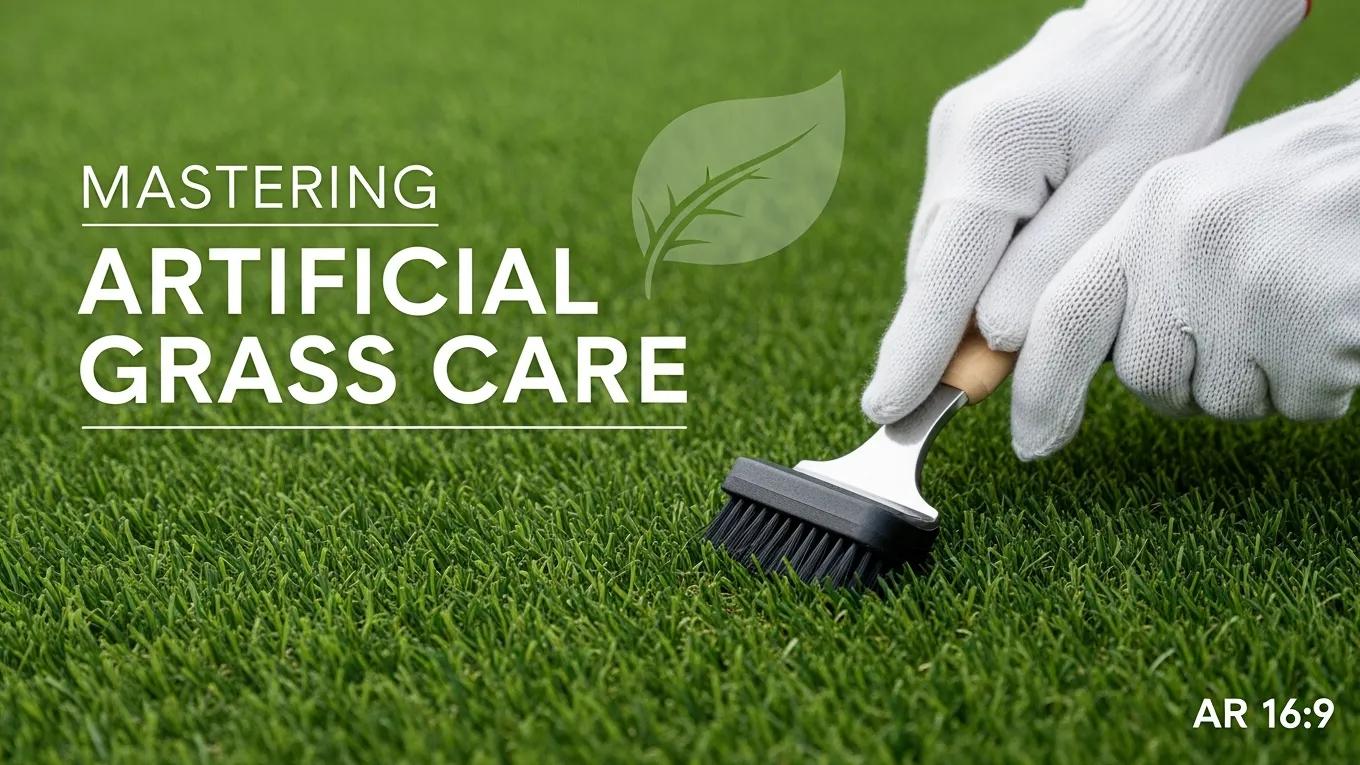
Essential Tips for Maintaining Your Artificial Grass: Comprehensive Guide to Artificial Turf Cleaning and Care
Proper maintenance preserves the performance and appearance of artificial grass. This guide outlines practical cleaning techniques, common issues to monitor, and recommended care routines. While synthetic turf reduces routine work compared with natural lawns, regular attention prevents matting, odours, and debris buildup. Follow these procedures to maintain a durable, attractive surface all year. The sections that follow cover comprehensive maintenance practices, proven cleaning methods and tailored advice for pet-friendly installations.
Experts consistently state that regular upkeep is critical to maintain both the durability and safety of artificial turf.
Regular Maintenance for Artificial Turf Lifespan & Safety
The industry and AGP owners note that regular maintenance is required to maximise the lifespan of a playing surface, regulate performance and ensure the surface remains safe for users.
Maintenance of artificial turf–putting research into practice, P Fleming, 2016
Comprehensive Guide to Maintaining Artificial Grass
Maintenance of artificial grass consists of routine cleaning, inspection and targeted repairs. Regular care prevents common problems such as matting, odours and debris accumulation. Understanding effective cleaning methods and prompt remediation will extend the service life of your turf. The following section details techniques, common issues and practical best practices for upkeep.
1. Cleaning Techniques:
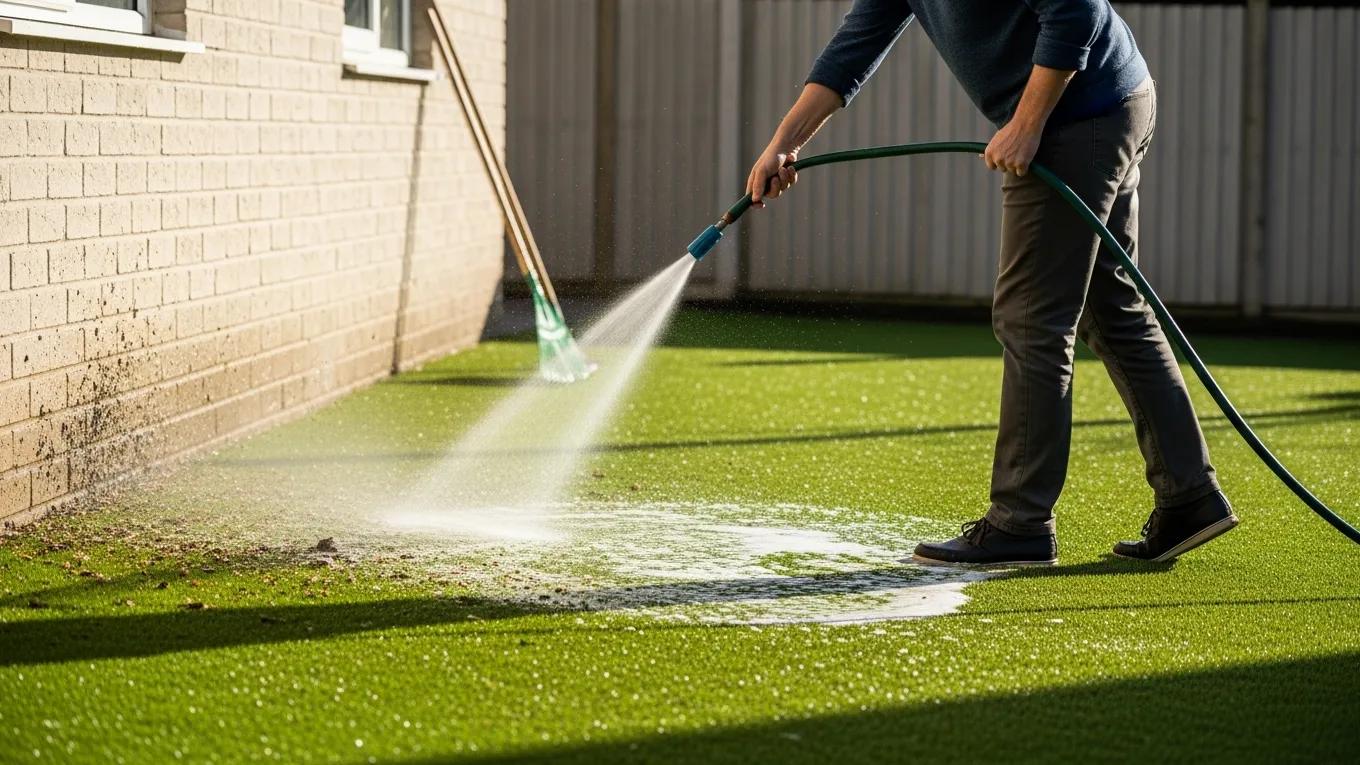
Routine cleaning maintains hygiene and appearance. Periodic rinsing removes dust and surface dirt; prompt removal of waste prevents staining and odours; and brushing restores fibre orientation to reduce matting. Deodorising products designed for turf further control smells in pet-friendly areas. Key techniques are listed below.
- Regular Rinsing: Use a hose to rinse the turf every few weeks to remove dust and dirt.
- Immediate Waste Removal: Promptly pick up pet waste to prevent staining and odors.
- Brushing: Use a stiff-bristled broom to brush the turf fibers regularly, keeping them upright and preventing matting.
Applying these cleaning techniques preserves the visual quality and sanitary condition of your artificial grass.
2. Common Issues:
Artificial grass is durable but not maintenance-free. Stains, fibre matting and drainage faults are the most frequent issues. Recognising these conditions early and applying the correct remedies helps protect the installation and performance of the turf.
- Stains: For stubborn stains, use a mixture of mild soap and water to gently scrub the affected area.
- Preventing Matting: Regular brushing helps prevent matting of the turf fibers, ensuring a natural look.
- Identifying Drainage Issues: Check for pooling water after heavy rain, which may indicate drainage problems that need to be addressed.
Addressing these issues promptly maintains the integrity and appearance of the surface.
3. Best Practices for Care:
Follow established best practices to extend turf life: avoid harsh chemicals, perform scheduled inspections, and adjust maintenance with seasonal conditions. These measures protect fibres and infill while sustaining performance.
- Avoid Harsh Chemicals: Use only turf-safe cleaning products to prevent damage to the fibers and infill.
- Regular Inspections: Periodically check for signs of wear, such as loose seams or damaged fibers, and address them promptly.
- Seasonal Adjustments: Adapt your maintenance routine based on seasonal changes, such as increased cleaning during fall when leaves may accumulate.
Consistent application of these practices will preserve both the function and appearance of your artificial grass.
4. Pet-Friendly Turf Maintenance:
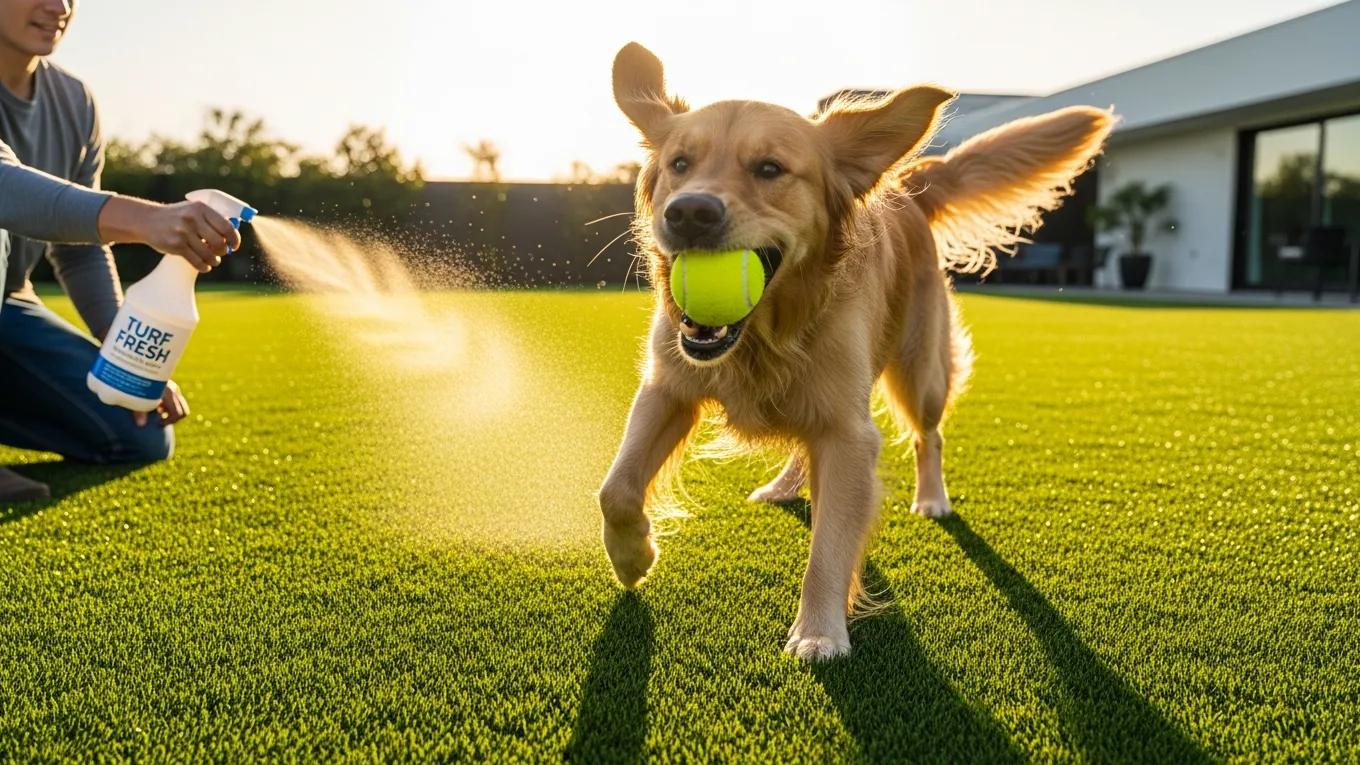
Pet installations require focused routines to control odours and reduce wear. Regular waste removal, routine rinsing and appropriate deodorising products keep the surface sanitary and comfortable for animals and owners. For more details, check our pet turf maintenance guide.
- Weekly Cleaning Routines: Rinse the turf weekly to remove pet waste and odors.
- Monthly Deep Cleaning: Conduct a thorough cleaning once a month using turf-safe deodorizing products.
- Odor Control Techniques: Use specialized turf deodorizing sprays to neutralize odors effectively.
Adhering to these pet-specific routines maintains a clean, durable surface and reduces long-term maintenance needs.
How to Clean Fake Grass: Step-by-Step Methods for Synthetic Turf Cleaning
Cleaning synthetic turf follows a clear sequence: remove loose debris, rinse, lift fibres with brushing, treat stains, and perform a final rinse. This method ensures thorough removal of contaminants and restores fibre orientation for consistent appearance.
- Remove Debris: Start by removing any leaves, twigs, or debris from the surface using a leaf blower or rake.
- Rinse the Turf: Use a hose to rinse the entire area, ensuring that dirt and dust are washed away.
- Brush the Fibers: After rinsing, use a stiff-bristled broom to brush the turf fibers against the grain, lifting them up.
- Address Stains: For any stains, apply a mild soap solution and scrub gently with a soft brush.
- Final Rinse: Rinse the area again to remove any soap residue and allow the turf to dry.
Performing each step in sequence maintains cleanliness and helps preserve the turf’s structural performance.
Which Products and Tools Are Safe and Effective for Artificial Turf Care?
Select products and tools designed specifically for synthetic turf. Turf-safe cleaners, stiff-bristled brooms and leaf blowers are practical and effective for routine maintenance without harming fibres or infill. Artificial grass installation
- Turf-Safe Cleaners: Look for biodegradable and non-toxic cleaning solutions specifically designed for artificial grass.
- Stiff-Bristled Broom: A broom with stiff bristles is essential for brushing the turf fibers and preventing matting.
- Leaf Blower: A leaf blower can efficiently remove debris without damaging the turf.
Choosing appropriate products and tools reduces the risk of damage and improves maintenance efficiency.
How Do You Maintain Pet Friendly Artificial Grass to Control Odors and Damage?
Controlling odours and limiting damage on pet turf requires prompt waste removal, routine rinsing and use of approved deodorising agents. These steps prevent bacterial buildup and reduce persistent smells.
- Regular Waste Removal: Promptly pick up pet waste to prevent odors and staining.
- Deodorizing Sprays: Use turf-safe deodorizing sprays to neutralize odors effectively.
- Frequent Rinsing: Rinse the turf regularly to wash away any residual odors and keep the surface clean.
Consistently applying these methods maintains a sanitary and pleasant environment for pets.
What Are the Best Practices for Pet Turf Maintenance and Odor Control?
Best practices for pet turf combine regular cleaning schedules with targeted products and material choices. Weekly surface maintenance, monthly deep cleans and antimicrobial infill options support durability and odour control.
- Weekly Cleaning: Establish a routine for weekly cleaning to remove waste and odors.
- Deep Cleaning: Conduct a deep cleaning monthly to address any buildup of dirt or odors.
- Use of Infill: Consider using antimicrobial infill materials to enhance durability and odor control.
Implementing these practices will sustain a hygienic, long-lasting pet turf installation.
How Do Antimicrobial Infill Materials Enhance Pet Turf Durability?
Antimicrobial infill inhibits bacterial and fungal growth within the infill layer. This reduces odour development and fibre degradation, helping the turf remain cleaner and more durable under pet use.
What Seasonal Care Is Required to Extend the Lifespan of Synthetic Lawns?
Seasonal care mitigates the effects of weather and organic debris on synthetic lawns. Tailor cleaning frequency and inspection routines to seasonal demands to protect fibres and drainage systems.
- Spring: Conduct a thorough cleaning to remove debris accumulated over winter.
- Summer: Regularly rinse the turf to prevent heat-related damage and maintain its appearance.
- Fall: Remove leaves and debris promptly to prevent matting and staining.
Adapting maintenance schedules by season preserves appearance and reduces long-term wear.
How Should You Adjust Artificial Grass Maintenance for Different Weather Conditions?
Weather affects cleaning priorities. After heavy rain, inspect drainage; in heat, increase rinsing to cool fibres; in cold, avoid tools that can damage frozen turf. These adjustments protect the installation under varying conditions.
- Rainy Weather: Increase drainage checks to prevent pooling water and ensure proper runoff.
- Hot Weather: Rinse the turf more frequently to cool it down and prevent heat damage.
- Cold Weather: Avoid using sharp tools on frozen turf to prevent damage to the fibers.
Modifying maintenance to match weather conditions helps prevent damage and maintain performance.
What Are the Recommended Seasonal Grooming and Cleaning Schedules?
Adopt a seasonal grooming schedule to balance cleaning effort and turf protection. Regular inspections and targeted cleaning at key times of year prevent deterioration and maintain aesthetics.
- Spring: Deep clean and inspect for any damage.
- Summer: Weekly rinsing and brushing to maintain appearance.
- Fall: Regularly remove leaves and debris to prevent staining.
- Winter: Inspect for ice buildup and avoid sharp tools on frozen surfaces.
Following a seasonal schedule optimises turf condition and reduces the need for major repairs.
How Can You Manage Weeds, Debris, and Infill to Keep Artificial Grass Pristine?
Effective management combines proper installation measures with routine surface care. Use weed barriers at installation, remove debris frequently and monitor infill levels to sustain stability and appearance.
- Weed Control: Use a weed barrier fabric during installation to prevent weed growth.
- Debris Removal: Regularly remove leaves and debris to prevent buildup.
- Infill Maintenance: Check and replenish infill materials as needed to maintain turf stability.
These measures maintain a consistent surface and reduce maintenance interventions over time.
What Are Effective Methods for Weed and Debris Removal on Synthetic Turf?
Manage weeds and debris with manual removal, non-abrasive mechanical tools and turf-safe chemical options when necessary. Prioritise methods that protect the backing and fibres.
- Manual Removal: Hand-pulling weeds is effective for small areas.
- Leaf Blower: Use a leaf blower to quickly remove debris without damaging the turf.
- Weed Killers: Apply turf-safe weed killers as a last resort to manage persistent weeds.
Selecting the correct method for the situation preserves turf integrity while keeping surfaces clean.
How Often Should You Perform Infill Maintenance and Turf Grooming?
Regular intervals for infill checks and grooming maintain fibre resilience and surface stability. Follow recommended frequencies to prevent compaction and matting.
- Infill Maintenance: Check infill levels every 3-6 months and replenish as needed.
- Turf Grooming: Groom the turf every 4-6 weeks to keep fibers upright and prevent matting.
Adhering to these schedules preserves performance and prolongs the usable life of the installation.
Which Products and Tools Optimize Artificial Grass Care and Maintenance?
Use products and tools engineered for synthetic turf: biodegradable cleaners, stiff-bristled brooms and leaf blowers reduce wear while improving maintenance outcomes.
- Turf-Safe Cleaners: Biodegradable cleaning solutions designed for artificial grass.
- Stiff-Bristled Broom: Essential for brushing turf fibers and preventing matting.
- Leaf Blower: Efficient for removing debris without damaging the turf.
Integrating these items into routine care increases efficiency and protects material performance.
What Cleaning Products Are Recommended for Safe and Eco-Friendly Turf Care?
Choose non-toxic, biodegradable cleaners and turf-safe deodorising sprays. For routine spot cleaning, a mild soap-and-water solution is effective and safe for pets and children.
- Biodegradable Cleaners: Look for cleaners that are non-toxic and safe for pets and children.
- Deodorizing Sprays: Use turf-safe deodorizing sprays to neutralize odors effectively.
- Mild Soap Solutions: A mixture of mild soap and water can be effective for spot cleaning.
Using approved, eco-friendly products maintains safety and reduces environmental impact.
How Do Specialized Brushes and Equipment Improve Synthetic Turf Cleaning?
Specialised brushes and equipment are designed to restore fibre alignment, remove deep dirt and redistribute infill. Proper tools increase cleaning effectiveness while minimising fibre damage.
- Stiff-Bristled Brushes: These brushes effectively lift and separate turf fibers, preventing matting.
- Power Washers: For deep cleaning, power washers can remove stubborn dirt and debris.
- Turf Rakes: These tools help evenly distribute infill and maintain the turf’s appearance.
Incorporating appropriate equipment into maintenance routines enhances results and reduces long-term degradation.
Consider exploring putting green options to enhance your outdoor space.
Additionally, hardscape elements can complement your artificial grass installation, creating a cohesive and visually appealing landscape.
For more information about our company and services, visit our about us page.
If you are interested in purchasing artificial grass, review our products page for specifications and options.
To learn more about BigBullyTurf and our offerings, visit our website.
Frequently Asked Questions
What is the lifespan of artificial grass?
Artificial grass typically lasts 15 to 25 years. Lifespan depends on material quality, installation, foot traffic and maintenance. High-quality turf with regular cleaning, adequate drainage and avoidance of harsh chemicals will reach the upper end of this range.
Can artificial grass be recycled?
Yes. Many types of artificial grass are recyclable and some manufacturers provide take-back or recycling programmes. Recycling generally involves processing the materials for reuse; check with your supplier for local options and accepted procedures.
How does artificial grass affect drainage?
Artificial grass is manufactured with a porous backing to allow water passage. Proper installation includes a prepared base to promote drainage and prevent pooling. If pooling occurs, it typically indicates an installation or maintenance issue that should be inspected and corrected.
Is artificial grass safe for children?
Yes. Most synthetic turf products are made from non-toxic materials and provide cushioning that reduces injury risk during play. Many products also include UV stabilisers to limit fading. Select certified, high-quality turf that meets safety standards for play areas.
How do I prevent weeds from growing through artificial grass?
Prevent weeds by installing a weed barrier fabric during preparation and by maintaining a clean surface. Remove debris that can trap soil and encourage growth. If weeds appear, remove them manually or treat with turf-safe herbicides as needed.
What should I do if my artificial grass gets damaged?
Assess the damage to determine whether a patch or adhesive repair will suffice. Small tears and frays can often be repaired on-site; larger damage or seam failure may require professional attention. Regular inspections help identify issues early and reduce repair complexity.
Can I install artificial grass myself?
Many homeowners complete DIY installations successfully, provided they follow correct ground preparation, base compaction and drainage procedures. Proper installation is critical to performance and longevity; if uncertain, engaging a professional installer ensures optimal results.