Independently lab-tested
Waffles Cooling infill cools turf by an average of 20°F cooler than competitors.
A ceramic-bead infill engineered for desert heat. In matched lab testing, it held a 17–22°F advantage over standard cooling infill for three straight hours — not a brief dip, a sustained cooling cycle.
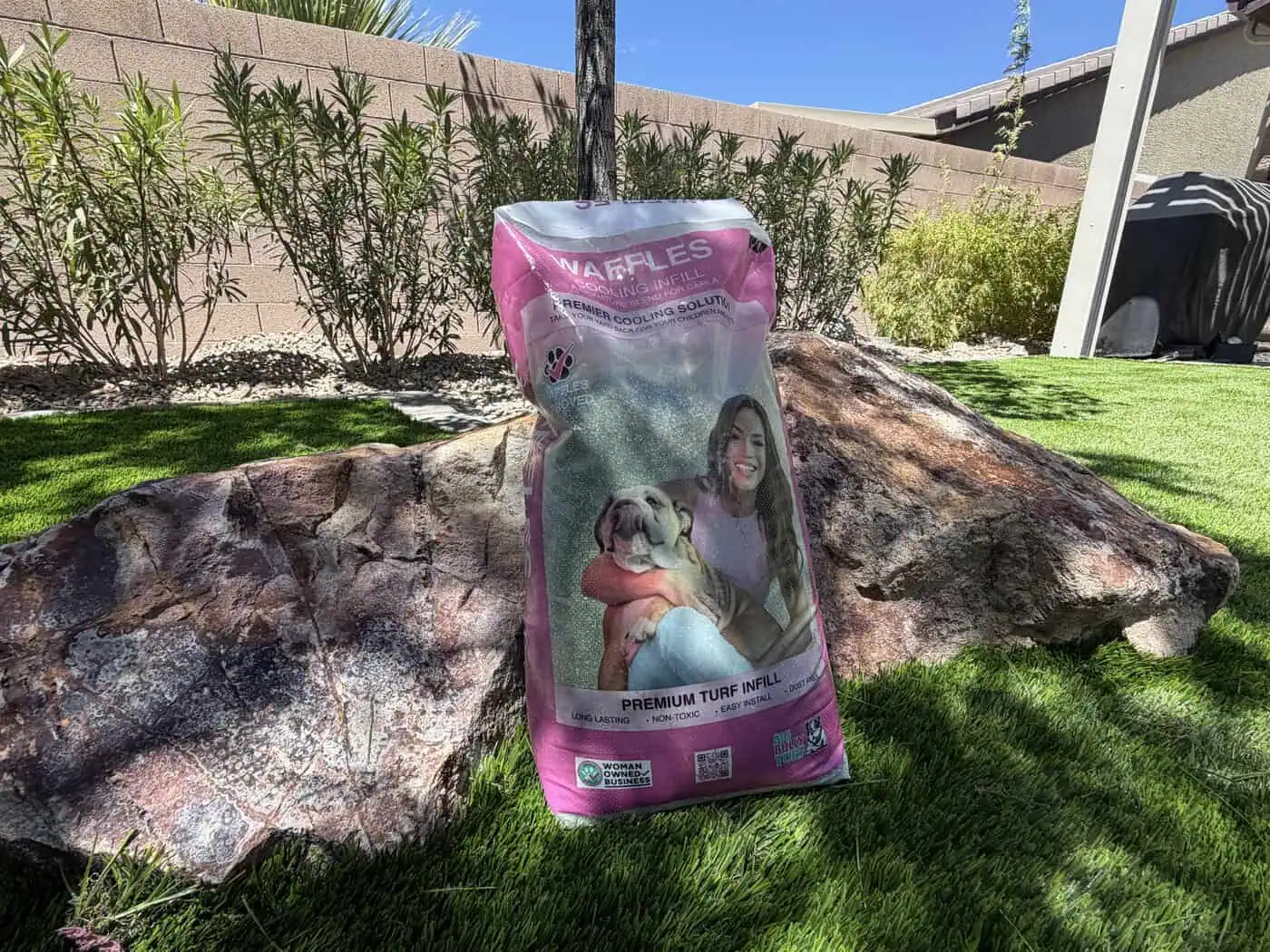
See it perform
Watch the difference Waffles Cooling Infill makes using an infrared thermometer in real time!
A side-by-side demonstration: Waffles Cooling Infill next to a standard cooling infill, same turf, same water, same outside temperature. Watch the surface temperature separate in real time.
Matched samples, single variable
Live surface temperature readings
The same effect the lab data measured
17–22°F
Cooler than standard cooling infill at every tested interval
3 hrs
Sustained cooling from a single full saturation
42%
USDA Certified Biobased content — supports LEED credits
2.0–2.5
lbs per sq ft — recommended application rate
The proof
Matched lab tests. Same turf, same water, same heat.
Firefly Sports Testing compared Waffles Cooling Infill against a standard cooling infill under identical conditions: both wet, both on 2" dual fiber turf at 32mm infill depth, heated for three hours.

Waffles Cooling Infill is the difference.
Both infills were installed on the same 2" dual fiber turf at 32mm depth, saturated the same way, and heated on the same three-hour cycle — so the temperature difference comes down to Waffles Cooling Infill itself.
Surface temperature over three hours of heating
Waffles Cooling Infill
Standard cooling infill
88.9°
107.3°
30 minutes
18.4°F cooler
95.6°
115.0°
60 minutes
19.4°F cooler
105.3°
125.5°
180 minutes
20.2°F cooler
The gap holds steady rather than closing. Waffles Cooling Infill stayed 17–22°F cooler at every interval from 15 minutes through 180 minutes — evidence of a sustained cooling effect, not a brief initial dip.
Tested by Firefly Sports Testing per FIFA Test Method 2024-12 (Modified). Waffles Cooling Infill tested as “Optifill+ with Ceramic” against “T°Cool” standard cooling infill. Both samples wet, 2" dual fiber turf, 32mm infill depth, 3-hour heat cycle.

How it works
A moisture exchange cycle that keeps restarting.
Standard cooling infill evaporates its water once and it's done. Waffles Cooling Infill layers two ceramic media with different porosities, so the top layer keeps pulling replacement moisture from the reservoir below it.
01
Evaporate
As the turf heats, the more surface-active ceramic releases its moisture first, pulling heat away from the surface.
02
Dry out
That top layer runs dry — the point where a single-media infill would stop cooling entirely.
03
Draw from below
It wicks fresh moisture out of the higher-porosity ceramic beneath, recharging itself in place.
04
Repeat
The exchange continues for hours. Irrigation, rain, or overnight dew restarts the whole cycle.
Even heat distribution
The sand matrix spreads heat across the profile, so the ceramic media cools a wide surface area instead of isolated spots.
A longer cooling window
Hours of effect rather than minutes — the difference between a yard that's usable at 3pm and one that isn't.
Lower peak temperatures
More consistent reduction across the day, because the cycle resets every time the ceramics rehydrate.
Learn more about Cayce, one of our real customers, and why she chose us for her backyard transformation

Where it's used
Anywhere bare feet and paws hit the turf.
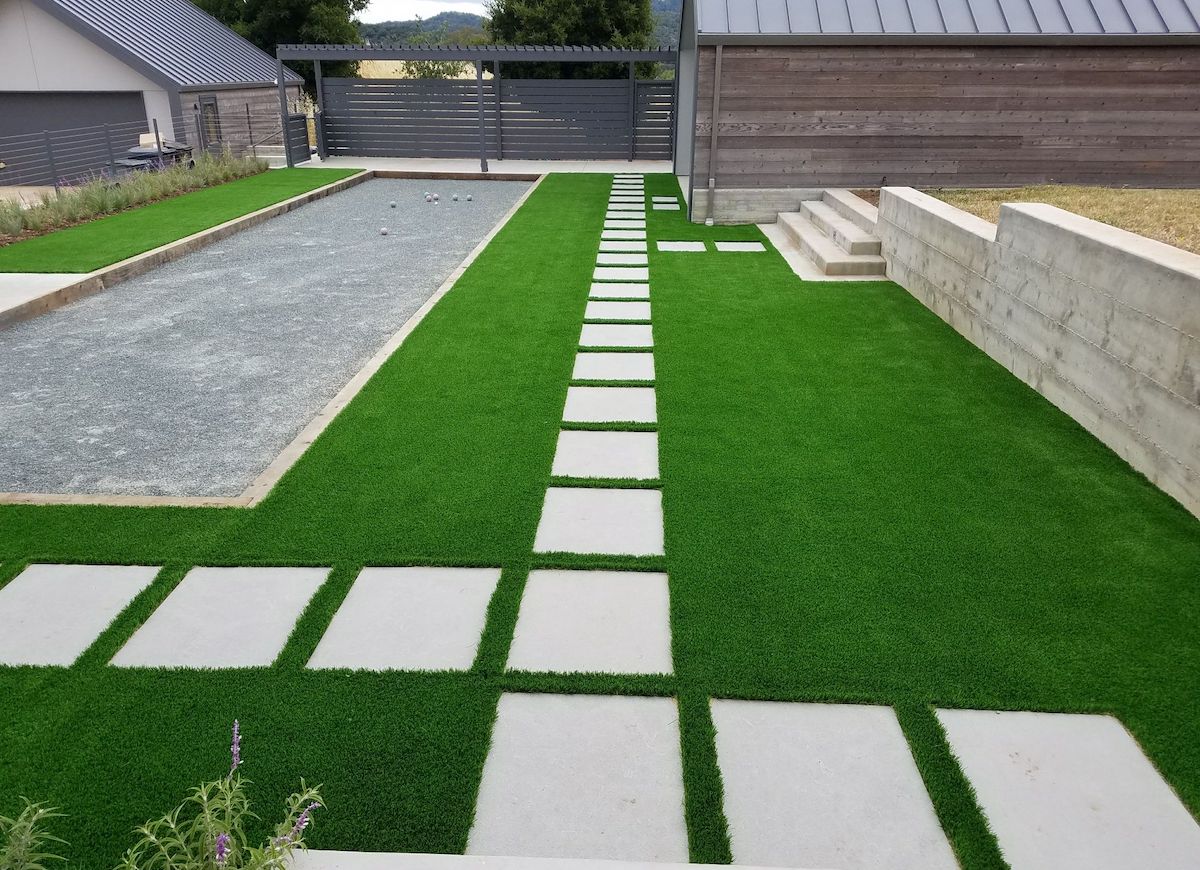
Residential lawns
Backyards that stay comfortable through desert afternoons.

Pet areas & dog runs
Cooler surfaces for paws in the hours dogs actually go outside.
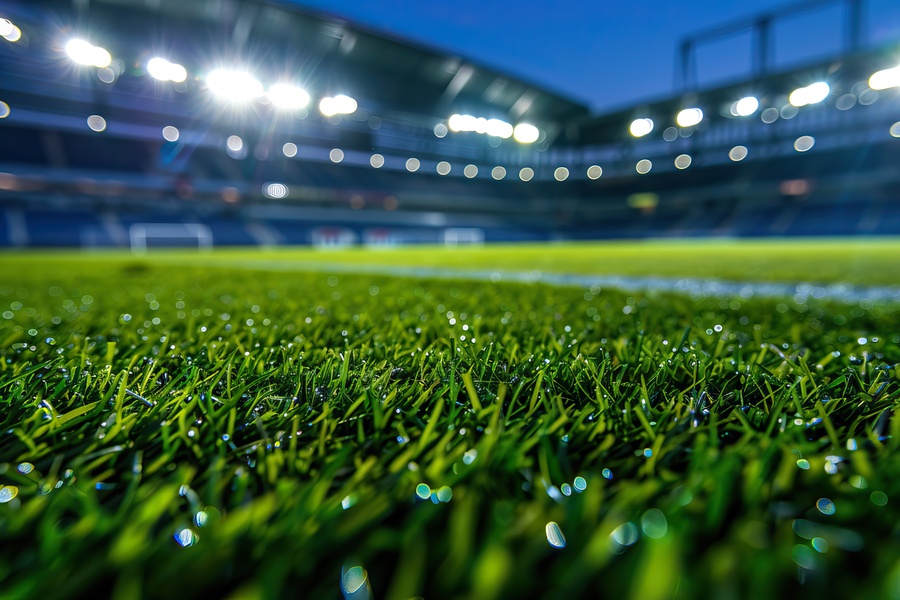
Athletic fields
Full-sun playing surfaces where heat drives cancellations.
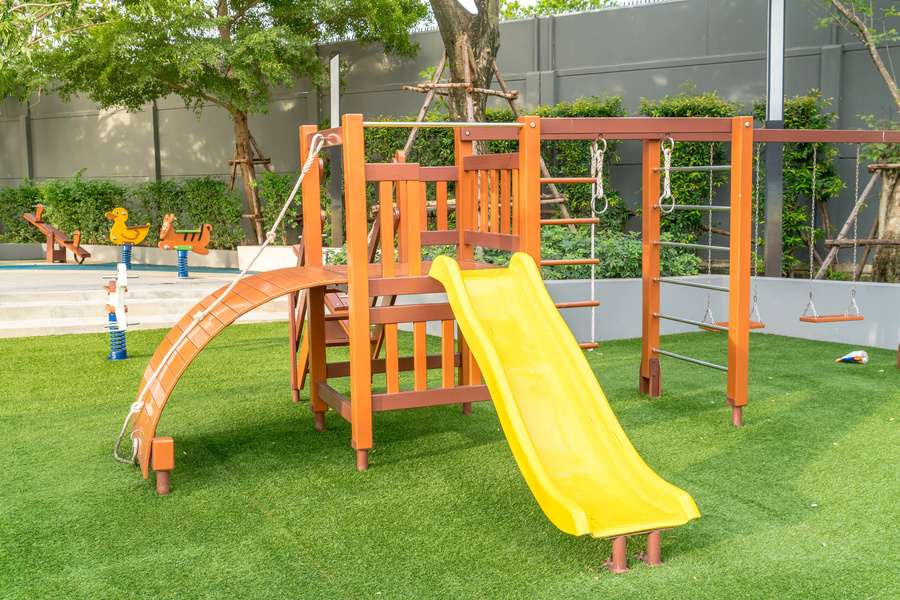
Playgrounds
Play surfaces for parks, schools, and community spaces.
Certifications & sustainability

USDA Certified Biobased at 42% biobased content.
The ceramic media carries USDA BioPreferred certification, which supports LEED Materials & Resources credits — relevant for government, parks, and commercial projects that require or incentivize LEED certification.
It's also a water-conservation story. One full saturation keeps the cooling effect active for hours, so the surface doesn't need constant watering, and rainfall reactivates it naturally.
42%
USDA Certified Biobased content
LEED
Supports Materials & Resources credits
1×
One saturation covers hours of cooling
Rain
Reactivates the cycle with no intervention
Using it correctly
Four things that decide how well it performs.
The cooling effect is only as good as the install and the watering habit behind it.
Watch the install & watering walkthrough
01
Apply at 2.0–2.5 lbs per sq ft
Enough depth for the two ceramic media to layer properly and hold a working moisture reservoir.
02
Wet the surface 2–3 hours before use
During peak heat, saturate fully ahead of time so the exchange cycle is running when you need it.
03
Don't over-water
One good saturation does the job. Continuous watering wastes water without extending the effect.
04
Let rain do the work
Rainfall and overnight dew rehydrate the ceramics on their own and restart the cooling cycle.
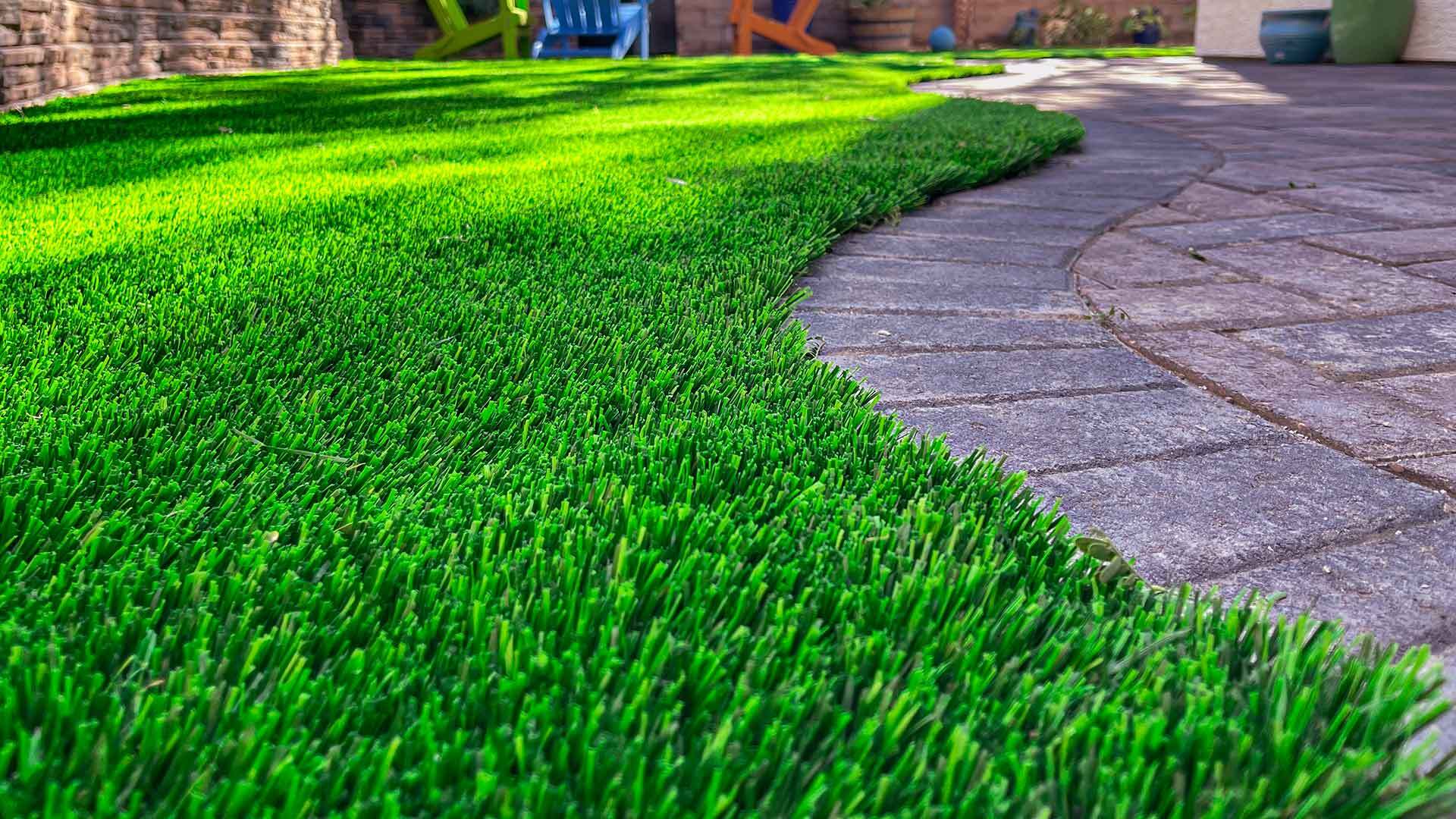
Real Install
Projects finished with Waffles Cooling Infill.


Frequently Asked Questions
Why should I choose Big Bully Turf for my outdoor space?
In matched lab testing it ran 17–22°F cooler than a standard cooling infill at every measured interval from 15 minutes to 180 minutes for example 88.9°F vs. 107.3°F at 30 minutes and 105.3°F vs. 125.5°F at three hours.
Who tested it, and how?
Firefly Sports Testing, using FIFA Test Method 2024-12 (Modified). Both infills were tested wet on 2″ dual fiber turf at 32mm infill depth and heated for three hours, so the only variable was the infill itself.
Will my lawn stay green year-round?
Waffles Cooling Infill is applied at 2.0–2.5 lbs per square foot. That depth lets the two ceramic media layer correctly and hold a working moisture reservoir. Your installer sizes the exact quantity to your project.
Does Artificial Grass offer good drainage?
Yes. The ceramic media is USDA Certified Biobased at 42% biobased content, which supports LEED Materials & Resources credits — relevant for government, parks, and commercial projects that require or incentivize LEED certification. Its low watering demand also supports water-conservation goals.
Can I get Waffles Cooling Infill anywhere else?
No. Waffles Cooling Infill is proprietary to Big Bully Turf and available on our installations.