Understanding Long-Term Maintenance Costs of Artificial Turf: Essential Insights for Homeowners
When considering artificial turf, many homeowners focus on the immediate visual appeal and installation cost but often overlook the detailed long-term maintenance expenses. This article provides a clear financial perspective on artificial turf ownership, comparing it directly with natural grass and including industry-standard estimates for annual upkeep.
What Are the Typical Annual Maintenance Costs for Artificial Turf Compared to Natural Grass?
The following table estimates annual maintenance costs for a typical 1,000 square foot residential lawn with moderate usage. All costs are in US dollars and reflect national averages but may vary by location and condition.
Note: Artificial turf cleaning supplies typically include enzyme-based cleaners specifically formulated for synthetic lawns to combat pet odors and debris. Brushing with a stiff synthetic bristle broom every 4-6 weeks helps maintain fiber uprightness and distribution of infill material.
Total Cost of Ownership Over 10 Years: Artificial Turf vs. Natural Grass
This section assumes a baseline lawn size of approximately 1,000 square feet residential. All cost estimates discussed scale proportionally with the size of the lawn; larger or smaller areas will experience corresponding increases or decreases in total expenditure.
When comparing artificial turf and natural grass over a 10-year horizon, it is important to understand that the cost structure differs significantly between the two. Below is a ballpark framework of installation and maintenance costs to provide practical insights rather than precise figures.
As the table indicates, artificial turf generally demands a higher upfront investment but tends to incur significantly lower annual maintenance costs compared to natural grass. Natural grass installation can be less costly initially but requires consistent and often costly maintenance throughout its lifespan, especially when full-service lawn care is considered. It is important to note that these maintenance costs for natural grass can realistically be even higher than the ranges suggested here when accounting for regional price variations and intensive care.
The economic crossover, or break-even point, between natural grass and artificial turf typically falls between years 7 and 9. This means that after this period, the cumulative savings from reduced maintenance on turf can offset its initial premium installation cost. However, this timeline can vary widely based on several factors:
- Local Water Rates: Regions with high water costs increase the overall expense of maintaining natural grass and shorten the payback period for turf.
- Lawn Size: Larger areas amplify both installation and maintenance costs proportionally, impacting total ownership costs and payback timelines.
- DIY vs. Professional Lawn Care: Homeowners who handle mowing and maintenance themselves at low cost may extend turf’s payback beyond 10–15 years, while those relying on paid lawn services typically achieve payback sooner.
A final point to consider is that many published cost comparisons originate from artificial turf installers, who have a commercial interest in promoting turf installations. Therefore, all figures should be treated as estimates rather than exact representations. Individual circumstances, local market conditions, climate factors, and personal preference heavily influence the actual costs and benefits.
In essence, neither natural grass nor artificial turf is universally the “better” financial choice. Instead, the best option depends on a homeowner’s unique situation, including budget, maintenance preferences, environmental considerations, and aesthetic priorities.
What Maintenance Tasks Are Essential for Artificial Turf, and How Often Should They Be Performed?
Specific, scheduled maintenance ensures turf durability and appearance:
- Brushing: Use a stiff synthetic bristle broom every 4 to 6 weeks to keep turf fibers upright and redistribute infill evenly.
- Cleaning: Monthly application of enzyme-based cleaners (e.g., those containing bio-enzymes or citrus extracts) helps prevent pet odor buildup and removes organic debris.
- Waste Removal: Immediately remove solid pet waste daily; rinse the area with water afterwards.
- Rinsing: In moderate pet-use areas, rinse with water weekly to reduce odors and urine salt deposits.
- Infill Replenishment: Every 2 to 3 years, top off or replace infill material (typically silica sand or crumb rubber) to maintain turf structure — expect $100 to $300 depending on lawn size.
- Inspections: Quarterly inspections identify seam separations, excessive fiber wear, or infill displacement to allow timely repairs.
Installer Tip: One common repair source is seam failure caused by heavy foot traffic or improper original adhesive application. Prevent this by limiting sharp furniture or sport equipment on turf and selecting a trusted installer who uses high-grade adhesives and seam tapes.
How Do Usage and Local Climate Impact Annual Turf Maintenance Costs?
High-traffic areas such as dog runs or sport surfaces require more frequent brushing (every 2 to 3 weeks) and cleaning due to increased wear and organic deposits. In hot, arid climates, rinsing once weekly is important to reduce heat buildup and accumulation of dust. By contrast, shaded or cool regions may extend rinsing to every two weeks.
Installer Insight: Infill tends to compact faster under intense use; neglecting timely replenishment can lead to premature fiber matting and a stiff texture, driving costly replacement within 8 years instead of 12-15.
How Does Artificial Turf Compare Financially to Natural Grass Over Time?
Beyond upfront installation costs, natural grass requires ongoing expenses commonly detailed as:
- Watering: An estimated 20,000 gallons/year for a 1,000 sq ft lawn in moderate climates, which translates to $300 – $600 per year depending on local rates.
- Mowing: Typically requires 30-50 cuts/year, costing $400 – $700 annually for equipment and/or labor.
- Fertilizing and Chemicals: Essential 3-5 times per year, costing $150 – $300.
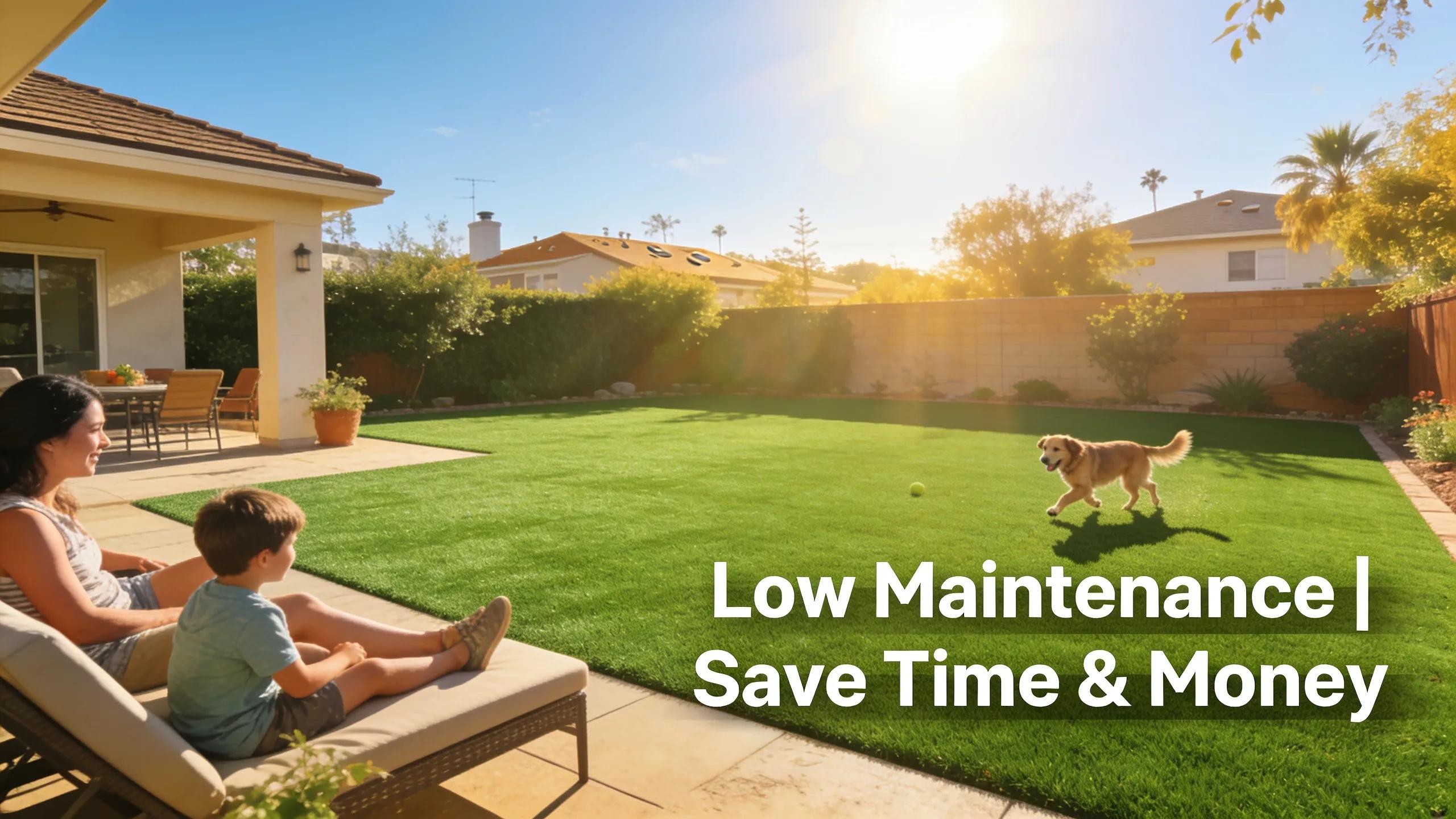
Artificial turf eliminates watering and mowing, reducing maintenance demands substantially. Despite higher initial installation costs, homeowners often recoup expenses via less maintenance within 6-8 years.
What Are the Warranty Lengths and What Repair Costs Can Homeowners Expect?
Most industry-leading artificial turf products carry warranties lasting 8 to 15 years against fiber degradation and structural failures. However, warranties often exclude damage caused by improper installation or excessive wear.
Repairs typically involve seam resealing and patch replacement. Costs range from $100 to $200 per repair visit, with annual average repair expenses around $50 to $100 for typical residential use. Major repairs are rare but can increase if seams fail due to heavy furniture or poor sub-base.
How Can Homeowners Minimize Upkeep Expenses and Extend Turf Longevity?
Recommendations include:
- Follow a brushing schedule: Brush every 4-6 weeks or biweekly in high traffic zones.
- Use enzyme-based cleaners with neutral pH monthly: Brands such as Simple Green Oxy Solve or Nature’s Miracle Turf Cleaner are effective and economical.
- Top off infill every 2-3 years: Avoid infill depletion which causes fiber flattening.
- Perform quarterly inspections to catch and repair minor seam issues early.
- Engage professional installation with proven adhesives: This reduces seam repairs and extends turf lifespan.
These targeted steps help avoid unexpected repair bills and maximize turf investment.
When and How Should Repairs and Inspections Be Scheduled?
Ideal inspection and maintenance intervals are aligned with seasonal changes:
- Spring: Examine for winter damage and clean accumulated debris.
- Summer: Increase brushing frequency in high-use months.
- Fall: Prepare turf for cooler weather, inspecting for seam separations.
- Winter: Minimal maintenance but check for water pooling or frost damage.
Consistent scheduling prevents major deterioration and costly refurbishments.
In summary, artificial turf offers predictable and typically lower annual maintenance costs compared to natural grass when factoring in water, labor, and material expenses. Homeowners looking for durable, low-upkeep landscapes should carefully assess usage levels, climate, and select high-quality turf with knowledgeable installation to fully realize financial and aesthetic benefits over a 10 to 15-year horizon.
For those interested in complementary landscaping solutions, incorporating hardscape elements can enhance artificial turf’s appeal and longevity while reducing debris accumulation.